
The South Korean gambling market has always balanced strict regulation with cutting-edge technology. By 2026, this balance is reaching a new stage with the emergence of AI dealers in live casino games. These systems are no longer experimental concepts but fully operational solutions designed to enhance efficiency, consistency, and user engagement in regulated casino environments. AI dealers combine computer vision, natural language processing, and behavioral analytics to replicate — and in some cases improve upon — the traditional live dealer experience.
This article explores how AI dealers are reshaping live casino games in South Korea, why this shift is happening now, and what it means for operators and players alike.
The Regulatory and Technological Context of South Korea
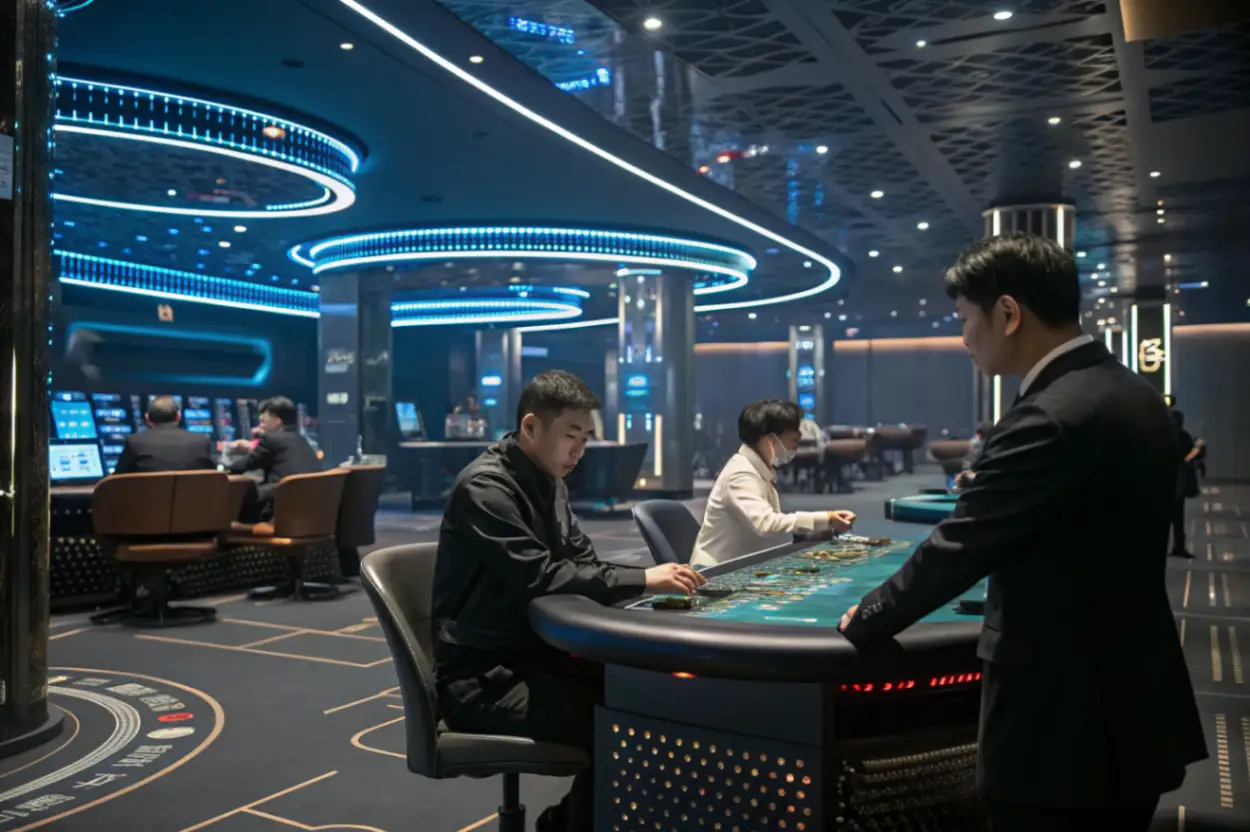
South Korea has one of the most complex gambling frameworks in Asia. While local citizens face significant restrictions, foreigner-only casinos and tightly controlled digital gambling platforms are allowed to operate under strict oversight. This environment has pushed operators to invest heavily in compliance-driven innovation, where automation and transparency are critical.
AI dealers fit naturally into this context. They allow casinos to standardize procedures, ensure full logging of gameplay, and minimize human error or misconduct. From a technological standpoint, South Korea’s leadership in AI infrastructure, 5G connectivity, and real-time data processing has made large-scale deployment feasible. By 2026, AI dealers are not seen as a risk factor by regulators, but rather as a controllable and auditable solution that aligns with national compliance goals.
How AI Dealers Work in Live Casino Environments
AI dealers are not simple animated avatars. They are complex systems integrating multiple layers of artificial intelligence to manage real-time gameplay, interaction, and monitoring. Cameras, sensors, and software work together to recognize cards, chips, player actions, and betting patterns without interruption.
Before examining the benefits, it is useful to understand the core components involved in these systems.
| Component | Function | Role in Live Games |
|---|---|---|
| Computer Vision | Card and chip recognition | Ensures accurate game flow |
| Speech Synthesis | Dealer communication | Provides natural interaction |
| Behavioral AI | Pattern detection | Flags irregular behavior |
| Game Logic Engine | Rule enforcement | Maintains fairness |
These elements operate simultaneously, allowing AI dealers to manage tables continuously without fatigue. After each round, all actions are logged automatically, which significantly simplifies auditing and dispute resolution. This technical reliability is one of the main reasons South Korean casinos have accelerated adoption.
Why Casinos Are Replacing Human Dealers
The shift toward AI dealers is not driven by novelty alone. Economic, operational, and strategic factors play a decisive role. Casinos operating in South Korea face high staffing costs, language barriers with international guests, and the need for uninterrupted service.
Several practical advantages explain the transition:
- Continuous operation without breaks or shift changes.
- Multilingual support for international players.
- Consistent enforcement of rules and pacing.
- Reduced operational costs over time.
These factors translate into higher table availability and more predictable margins for operators. Importantly, AI dealers also reduce the risk of human-related disputes, which is particularly valuable in a jurisdiction where compliance violations can lead to severe penalties. After initial investment, maintenance costs remain relatively stable, making AI dealers attractive for long-term planning.
Player Experience and Trust in AI-Driven Live Games
A common concern among players is whether AI dealers can replicate the atmosphere and trust associated with traditional live dealers. In South Korea, this concern has been addressed through careful design choices focused on transparency and realism.
AI dealers are programmed to explain game outcomes clearly, display real-time decision logs, and respond consistently to player inputs. Facial animations, voice modulation, and reaction timing are calibrated to feel natural rather than mechanical. Over time, many players report increased confidence due to the absence of human bias and the visibility of automated processes.
Trust is further reinforced by the integration of third-party verification systems that continuously audit AI behavior. In a market where credibility is essential, these measures have helped AI-driven live games gain acceptance among both casual and high-stakes players.
Economic Impact on the Casino Industry
The adoption of AI dealers is reshaping cost structures across the South Korean casino industry. While initial implementation requires significant investment in hardware and software, long-term savings are substantial. Staffing expenses, training programs, and turnover-related disruptions are reduced dramatically.
Beyond cost reduction, AI dealers enable new revenue models. Casinos can deploy more tables in limited physical space, experiment with dynamic betting limits, and offer personalized game variations based on player profiles. These capabilities allow operators to optimize yield without increasing regulatory risk.
By 2026, AI dealers are no longer viewed as a replacement tool but as a strategic asset that supports scalability and resilience in a highly regulated market.
The Future of Live Casino Games in South Korea
Looking ahead, AI dealers represent only the first phase of a broader transformation. Future developments are expected to include adaptive game mechanics, deeper personalization, and integration with responsible gambling systems. AI will not only manage games but also monitor player behavior to prevent harmful patterns.
South Korea’s approach suggests a hybrid future where AI dealers coexist with limited human-hosted experiences, each serving different segments of the market. Rather than eliminating human interaction entirely, AI systems will handle high-volume, compliance-intensive operations, freeing human staff for premium or entertainment-focused roles.
Conclusion
AI dealers are redefining live casino games in South Korea by 2026. Driven by regulatory demands, technological readiness, and economic logic, this shift reflects a broader global trend toward automation in gambling. While the concept once seemed controversial, practical results have demonstrated improved efficiency, transparency, and player trust.
As AI technology continues to evolve, South Korea is positioned to remain a leading example of how innovation and regulation can coexist. The revolution in live games is already underway, and AI dealers are at its core.