
Japan IR Update 2026: Osaka Casino Opening Date, Construction Progress and What Tourists Can Expect
For a country that criminalised private-sector gambling in 1907, Japan has spent an extraordinary amount of time thinking about casinos. Twenty years of study, lobbying and legislative wrangling culminated in the 2018 Integrated Resort Implementation Act, a law that quietly permitted up to three licensed casino resorts nationwide. Osaka won the first — and so far only — approval in April 2023. A joint venture between MGM Resorts International and Orix Corporation broke ground on Yumeshima Island in April 2025, next to the site of Expo 2025, which closed its gates in October after welcoming roughly 28 million visitors. As of mid-2026, the MGM Osaka project is the most advanced casino resort development in Japanese history, and it remains the only one with a national government stamp of approval. For tourists, investors and anyone curious about Japan's emerging casino landscape, the picture is coming into focus — though not without complications, delays and a regulatory framework unlike anything else in the global gaming industry.
The project at a glance
MGM Osaka sits on a 49-hectare parcel of Yumeshima, an artificial island in Osaka Bay built from decades of reclaimed landfill. The total investment has climbed through successive cost revisions, with the most recent figures placing it around ¥1.27 to ¥1.51 trillion — approximately $8.9 to $9.66 billion — making it one of the most expensive private developments ever undertaken in Japan. MGM Resorts and Orix Corporation each hold roughly 42.5% of the operating entity, with the remaining 15% distributed among minority shareholders including Panasonic, Kansai Electric Power and West Japan Railway.
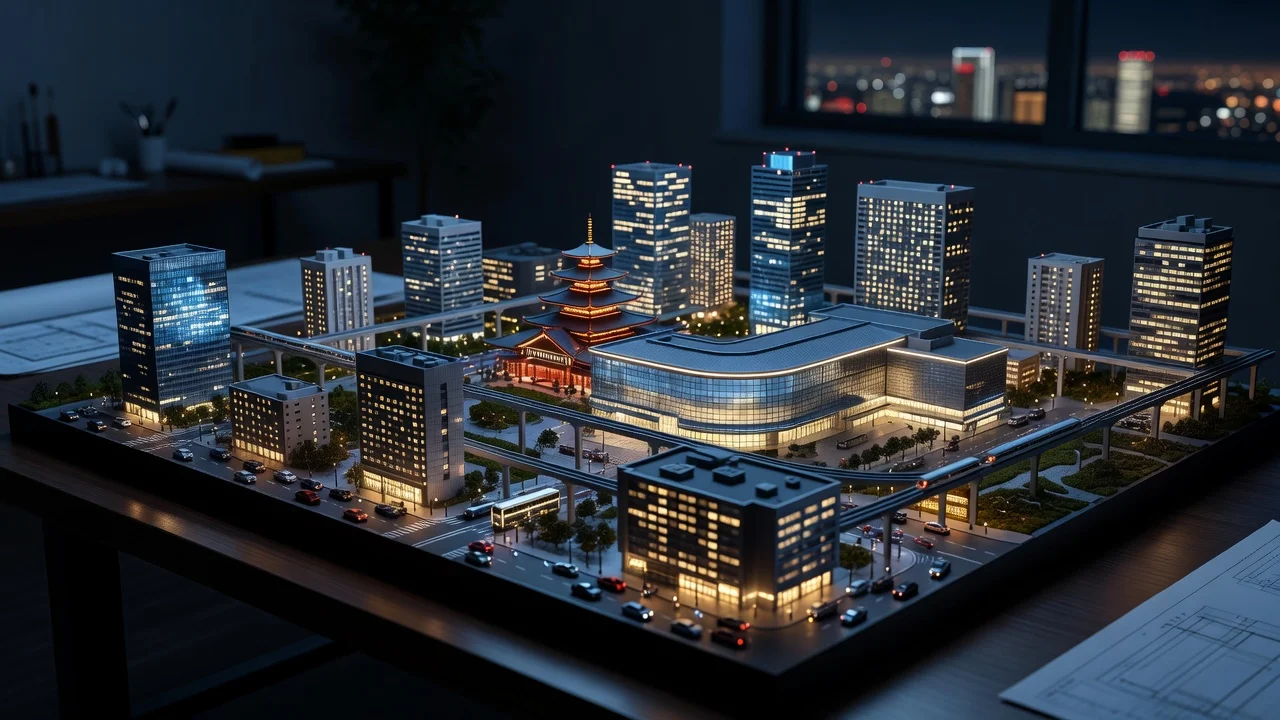
The design centres on a 27-story, 126-metre main tower curved in an arc described as reminiscent of the Bellagio in Las Vegas. This building houses two hotels with a combined 1,840 rooms. A separate 13-floor resort hotel standing 56 metres adds another 660 rooms, bringing the total to approximately 2,500 across three hotel brands: the flagship MGM Osaka, the ultra-luxury MGM Villas and the culturally themed MUSUBI Hotel. A four-story section covering 16.7 hectares provides the resort's MICE facilities — meeting rooms, conference halls and exhibition space totalling over 730,000 square feet, capable of accommodating more than 6,000 delegates. A 3,500-seat theatre, retail promenades, restaurants, a spa, a fitness centre and a Kansai Tourism Centre round out the non-gaming offerings.
The casino floor itself spans 23,293 square metres — deliberately limited by Japanese law to no more than 3% of the total IR floor area. Inside, the plans call for approximately 470 table games covering baccarat, poker and other offerings, alongside 6,400 electronic gaming machines. The maximum occupancy of the casino area is capped at 11,500 individuals at any one time.
How the timeline shifted
The path from concept to construction has not been a straight line. Osaka originally hoped to open its IR before the Expo 2025, a timeline that now reads as wildly optimistic in hindsight. The central government approved the area development plan in April 2023, roughly six months later than local authorities had expected, which cascaded into delays across the entire schedule. By September 2023, the opening was officially pushed back from autumn-winter 2029 to autumn 2030, and the cost estimate was revised upward accordingly.
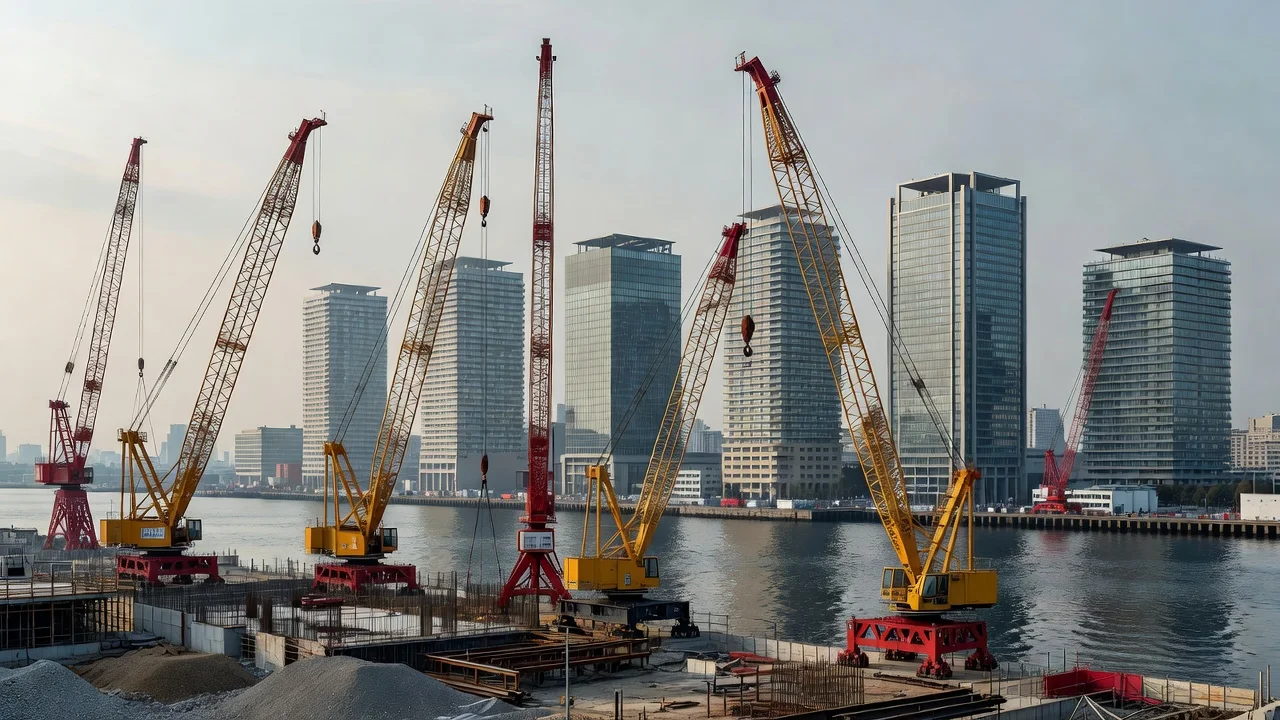
Construction was scaled back during the Expo's six-month run to minimise noise and visual disruption for visitors, with heavy machinery activity resuming in earnest after the Expo closed on 13 October 2025. The operator — formally known as Osaka IR KK — waived its contractual right to withdraw from the project without penalty, signalling commitment despite the rising costs. MGM Resorts increased its equity contribution to approximately $3 billion and committed roughly $450 million in equity to the project in 2026 alone.
Key milestones in the project's timeline help illustrate how the schedule has evolved from the first announcement to the current construction phase:
- September 2021 — Osaka Prefecture and City selected the MGM-Orix consortium as the preferred IR partner, beating out competing proposals.
- April 2023 — Japan's national government officially approved the Osaka area development plan, making it the first and only IR certification under the 2018 law.
- September 2023 — The opening date was revised from autumn 2029 to autumn 2030, reflecting the delayed government approval and rising construction costs.
- April 2025 — A groundbreaking ceremony was held on Yumeshima Island, with full-scale construction commencing on 24 April. Land preparation and anti-liquefaction ground work had begun earlier, in late 2023.
- October 2025 — Expo 2025 Osaka-Kansai closed after drawing roughly 28 million visitors over six months, freeing up the island for intensified construction activity.
- March 2026 — Japan's Cabinet approved the second IR application window, running from 6 May to 5 November 2027, for the two remaining national casino licences.
- Mid-2026 — Structural work on the main tower and resort hotel is progressing, with leadership changes at the operator level including the appointment of Nobuki Watanabe as representative director and chairman from May 2026.
The word "around" does a lot of heavy lifting in any discussion of the opening date. Every credible source — from the Osaka prefectural government to MGM's own investor communications — qualifies the 2030 target with language like "approximately" or "targeting." Japan's construction sector faces chronic labour shortages, and Yumeshima's reclaimed-land geology carries known subsidence and liquefaction risks that add engineering complexity. Industry analysts have noted that a further 12-to-18-month delay would not be surprising, though the operator and local government both insist the schedule is holding.
Construction progress on the ground
With the Expo behind it, the Yumeshima site has shifted into an intensive construction phase. By mid-2026, the project has moved well beyond ground preparation into visible structural work. Foundation walls are reported to be standing at significant heights, steel framing for the main tower is rising, and utility infrastructure — electrical conduits, HVAC ductwork and plumbing — is being installed in the lower levels. The construction crew count is reported at approximately 1,400 workers on-site daily, operating in rotating shifts to maintain momentum.
The build sequence is phased. The main 27-story tower and the 13-story resort hotel are the priority structures, followed by the four-story MICE and parking complex. A rail extension of the Kintetsu Nara Line is planned to connect the resort to central Osaka, and the Osaka Metro Chuo Line already reaches the island via the newly opened Yumeshima Station, which was built for the Expo and will serve the IR once operational.
The adjacent former Expo site — roughly 500,000 square metres of prime bayfront land — is being prepared for complementary development. The Osaka city government has selected two finalist proposals from the private sector: one envisioning a permanent racing circuit with potential for a Formula 1 Grand Prix bid, paired with a large-scale arena; the other proposing a world-class luxury resort anchored by a water park. A 200-metre section of the Expo's iconic Grand Ring wooden structure will be preserved as a heritage element, creating a bridge between the Expo's legacy and the IR's future.
What the resort will offer beyond the casino
The phrase "integrated resort" is doing a lot of work here, and the casino is only one component of a much larger vision. Japan's IR law was written specifically to ensure that these developments function as comprehensive tourism destinations rather than standalone gambling halls. The 3% cap on casino floor space is the most visible expression of that philosophy, but it extends to every aspect of the design.
The resort's non-gaming facilities are designed to attract 20 million annual visitors — a figure that includes convention delegates, hotel guests, shoppers, diners and entertainment seekers who may never set foot on the casino floor. The MICE space, at over 730,000 square feet, is among the largest convention offerings in Asia and positions MGM Osaka to compete directly with Marina Bay Sands in Singapore for international conference business. The 3,500-seat theatre is slated for residencies and touring productions, while the Kansai Tourism Centre and Japan Food Pavilion are designed to channel visitors outward into the broader Kansai region rather than keeping them captive inside the resort.
The three hotel brands serve distinct market segments. MGM Osaka targets the premium international traveller, MGM Villas cater to ultra-high-net-worth VIPs, and the MUSUBI Hotel is designed as a culturally immersive experience that blends Japanese aesthetics with modern hospitality. The MUSUBI concept reportedly includes studios where guests can participate in traditional activities such as tea ceremonies, reinforcing the IR's mandate to showcase Japanese culture alongside its international entertainment offerings.
The facility breakdown below captures how the resort's square footage is distributed across its primary functions.
| Facility | Approximate size | Key features |
|---|---|---|
| Casino floor | 23,293 sq m | 470 table games, 6,400 electronic machines, max 11,500 occupants |
| Main tower (hotels) | 27 stories, 126 m | 1,840 rooms across MGM Osaka and MGM Villas |
| Resort hotel | 13 stories, 56 m | 660 rooms, tea ceremony studios, cultural experiences |
| MICE space | 730,000+ sq ft | Conference rooms for 6,000+, exhibition halls, innovation lab |
| Theatre | 3,500 seats | Live performances, residencies, touring shows |
| Retail and dining | Multi-level promenade | Restaurants, shops, Japan Food Pavilion, Kansai Tourism Centre |
The distribution of space makes a clear statement about priorities. The casino occupies a fraction of the total footprint, while convention, hospitality and cultural facilities dominate. This is by design — the IR law's drafters studied Singapore's integrated resort model closely and built in safeguards to ensure that the gaming component would support, rather than define, the overall development. For tourists who have no interest in gambling, the resort is engineered to function as a luxury convention and entertainment destination that happens to include a casino rather than the other way around.
Casino rules: what tourists need to know
Japan's regulatory framework for casino gaming is among the strictest in the world, and the rules differ sharply depending on whether you are a foreign visitor or a Japanese resident. Understanding these distinctions before the resort opens will save tourists from surprises at the door.
The most important rule for international travellers is also the simplest: foreign tourists enter the casino for free. There is no entry fee, no frequency limit and no identity verification beyond presenting a passport at the door. Japanese nationals, by contrast, face a ¥6,000 entry fee — split evenly between a ¥3,000 national fee and a ¥3,000 municipal fee — collected by the operator on behalf of the government. Residents are limited to three visits per week and ten visits per 28-day period, tracked using the national My Number identification card system. Anyone under 20 is barred from entering the casino area entirely, regardless of nationality.
Several additional regulatory provisions shape the casino experience in ways that distinguish it from Las Vegas, Macau or Singapore:
- Cash-only chips for Japanese nationals — local residents must purchase casino chips with cash only. ATMs are prohibited inside the casino facility. Foreign visitors may use credit cards, a distinction designed to facilitate tourism spending while discouraging problem gambling among locals.
- Identity verification at entry and exit — all customers must present identification when entering and leaving the casino activity area. Non-resident foreigners may use passports; Japanese nationals must use My Number cards.
- Advertising restrictions — every casino advertisement or promotion must include a warning about the connection between casino use and problem gambling, plus a notice that persons under 20 are prohibited from entering.
- Comps regulation — complimentary items are permitted but regulated. Comps that are deemed excessive or contrary to public morals are prohibited, and the operator must maintain detailed records of all comps provided, including dates, customer names and amounts.
- Taxation on gross gaming revenue — the operator pays 15% of GGR as a national tax and 15% as a municipal tax, totalling a 30% tax rate on gaming revenue. This is collected monthly and represents one of the higher gaming tax rates globally, particularly for a market launching from zero.
- Junket restrictions — unlike Macau, where junket operators play a significant role in VIP operations, Japan requires all casino activities — including junket functions — to be conducted solely by licensed casino business operators. There is no separate junket licensing framework.
- Anti-money laundering compliance — the Financial Services Agency's revised AML and CFT guidelines impose operational effectiveness standards on casino-linked financial intermediaries, effective from March 2026, adding another compliance layer ahead of opening.
The cumulative effect of these rules is a casino environment that will feel noticeably different from other global gaming destinations. The absence of ATMs on the casino floor, the mandatory ID checks at entry and exit, and the strict visitation limits for locals create a controlled atmosphere that prioritises regulatory compliance over the freewheeling hospitality that characterises Las Vegas. For foreign tourists, the experience will be more straightforward — show a passport, enter freely, play without restrictions — but the overall ambience will still reflect Japan's cautious approach to an industry it has historically treated with deep suspicion.
The broader IR landscape beyond Osaka
Osaka is not the end of Japan's casino story. The 2018 IR law permits up to three integrated resorts nationwide, and two licences remain unclaimed. The Japanese government has confirmed that the second application window will run from 6 May to 5 November 2027, giving prefectures and ordinance-designated cities the opportunity to submit development plans in partnership with private-sector operators.
The level of visible interest, however, is lower than many industry observers expected. Nagasaki Prefecture, which applied in the first round and was rejected in December 2023 due to doubts about its financing model, is exploring a renewed bid centred on Omura City. A feasibility study council is being established in August 2026, with a recommendation expected by the end of the year. Aichi Prefecture has issued a request for proposals for a possible IR, and Hokkaido has released a provisional policy framework without making a formal commitment. No major metropolitan area — including Tokyo, which investors have long considered the most attractive potential IR location — has publicly declared an intention to apply.
The lack of enthusiasm reflects several factors. The regulatory complexity is daunting: MGM Osaka reportedly must satisfy more than 200 discrete responsible-gambling requirements before launch. The financial commitment is enormous, with costs for a credible IR project running into billions of dollars. Public opinion in Japan remains divided on casino development, and local politicians are often reluctant to reveal pro-IR positions ahead of elections. The fact that only one of the initial round's proposals advanced to approval has reinforced the perception that the barriers to entry are exceptionally high.
Despite these headwinds, the 2027 window represents a genuine opportunity. If one or two additional licences are awarded, Japan's regulated casino market could expand to a three-IR structure by the mid-2030s, transforming the country from a single-site curiosity into a regional gaming destination with national reach. But that expansion depends on whether any prefecture can assemble the political will, the financing and the private-sector partnership needed to meet Japan's exacting standards.
Infrastructure and access: getting to Yumeshima
One of the most practical questions for future visitors is how they will actually reach the resort. Yumeshima is an artificial island with historically limited access, and the infrastructure improvements designed to support both the Expo and the IR are still being expanded.
The Osaka Metro Chuo Line was extended to Yumeshima Station, which opened in January 2025 ahead of the Expo, providing direct subway access from central Osaka in roughly 20 to 30 minutes. This line will continue to serve the IR once it opens. The Kintetsu Nara Line is being extended to connect the island to the broader rail network, improving access from neighbouring prefectures. The Naniwasuji Line — a new north-south metro corridor running from Shin-Osaka Station through central Osaka to Namba and eventually toward the bay area — is under construction with an estimated completion around 2031, though it may not be fully operational by the IR's opening.
For tourists arriving via Kansai International Airport, the journey to Yumeshima will involve a combination of rail and potentially ferry connections, with a ferry terminal planned as part of the IR complex. The resort is also expected to include a bus terminal for group travel and convention shuttles. Plans for a heliport on the adjacent former Expo site have been discussed, which would provide VIP helicopter access — a feature common to integrated resorts in Macau and Singapore.
The infrastructure story is critical to the IR's commercial success. Analysts have noted that the resort's revenue model depends on filling the casino with new guests roughly four times per day to meet its visitor targets, which requires seamless transportation links. If access remains constrained — particularly during peak convention periods or major events at the adjacent entertainment district — the resort's ability to hit its projected 20 million annual visitors could be compromised.
Economic impact and job creation
The scale of the economic expectations surrounding MGM Osaka is staggering for a single development. The project is projected to generate annual gaming revenue of approximately $5.9 billion with an EBITDA exceeding $2 billion — figures that would place it among the most profitable casino resorts in the world from day one. The broader economic ripple effect across the Kansai region is estimated at roughly ¥1.1 trillion (approximately $8 billion) per year, with up to 93,000 jobs created when direct, indirect and induced employment are combined.
The operator itself expects to employ approximately 15,000 people on-site, spanning hotel operations, food and beverage, convention management, entertainment, retail and casino staff. Recruitment for these positions is expected to intensify as the opening approaches, with training programmes likely beginning 12 to 18 months before launch. The resort's payroll will be a significant economic driver for the Konohana Ward area and the broader Osaka metropolitan region.
Tax revenue is another major component. The 30% combined tax on gross gaming revenue, along with the entry fees collected from Japanese nationals, will flow to both national and municipal coffers. Early projections suggested annual taxes and business-related receipts of approximately ¥106 billion, though these figures will depend on actual gaming revenue performance.
What remains uncertain
Despite the steady progress, several risks hang over the project. Yumeshima's geology is the most persistent concern. The island was constructed as a waste landfill over decades, and the soft ground requires extensive soil improvement work to support structures of this scale. Concerns about cost overruns related to ground reinforcement have been raised repeatedly by engineering assessments. The island also has limited evacuation routes in the event of natural disasters — a serious consideration in earthquake-prone Japan.
Construction cost inflation across Japan has been elevated since the pandemic, and the concentration of large-scale projects in the Osaka area — including the Expo, the IR and multiple urban redevelopment schemes — has kept labour and materials costs high. Analysts have warned that elevated construction costs may persist through 2030, putting pressure on the project's budget and potentially its timeline.
Public opposition, while not as vocal as it was during the legislative debate, remains a background factor. A 2020 Asahi Shimbun survey found that 64% of respondents favoured freezing the government's IR plans. While attitudes may have softened as the project moved from abstract proposal to concrete construction with tangible economic benefits, the underlying concern about gambling addiction has not disappeared. The strict regulatory framework is partly a response to this public anxiety, and any perceived failure in the responsible-gambling measures could trigger political backlash.
Finally, there is the question of whether the revenue projections are realistic. The IR's business model assumes 20 million annual visitors and a casino that turns over its capacity four times daily. This assumes strong international tourism recovery, effective marketing to high-value international gamblers, and a convention business that can fill the massive MICE space consistently. If any of these assumptions underperform, the financial returns could fall short of expectations — though the non-gaming components provide a buffer against over-reliance on casino revenue.
A new chapter for Japanese tourism
When MGM Osaka opens its doors in or around autumn 2030, it will mark the end of a journey that began with a penal code passed in 1907 and a legislative battle that spanned two decades. It will also mark the beginning of something Japan has never had: a licensed, regulated, world-class integrated resort that combines casino gaming with convention facilities, luxury hotels, cultural experiences and entertainment on a scale previously unseen in the country.
For tourists, the resort promises a destination that blends the polish of a Las Vegas mega-property with the hospitality standards and aesthetic sensibility that define Japanese luxury. For the Kansai region, it represents a transformative economic catalyst that could reposition Osaka as Asia's next great convention and entertainment hub. And for the global gaming industry, it opens the last major untapped market in the developed world — a market with a population of 125 million, a tourism draw that rivals any country in Asia, and a regulatory framework that prioritises sustainability over short-term extraction.
The construction cranes on Yumeshima are building more than a casino. They are building a test case for whether Japan can reconcile its deep cultural ambivalence about gambling with its ambition to be a global tourism powerhouse. The answer will arrive, one way or another, in 2030.