
Luxury casinos in Europe are no longer competing only on chandeliers, private salons, or the prestige of a famous address. Those elements still matter, but they are no longer enough on their own. A younger affluent audience, especially millennials and older Gen Z luxury travelers, tends to judge value differently. They want style, but they also want movement, atmosphere, social energy, and a reason to stay longer than a single gambling session. In travel more broadly, Deloitte says millennials and Gen Z now dominate travel demand, while McKinsey notes that luxury travel is no longer defined only by the ultra-rich; a large share of the market now comes from travelers below the classic billionaire archetype.
That shift is precisely why Monaco matters. Few places in Europe can combine historic gambling prestige, concentrated wealth, elite hospitality, nightlife, gastronomy, and walkable urban glamour in the same square kilometre. Monte-Carlo Société des Bains de Mer does not present its casinos as isolated gaming halls. It presents Monaco as an interconnected resort world of hotels, restaurants, bars, clubs, events, spas, and gaming, all tied together under one luxury umbrella. That is the real story behind Monaco’s future: not whether rich young people will gamble, but whether offline gambling can become one premium touchpoint inside a broader status-driven leisure ecosystem.
Why the old luxury casino model feels dated
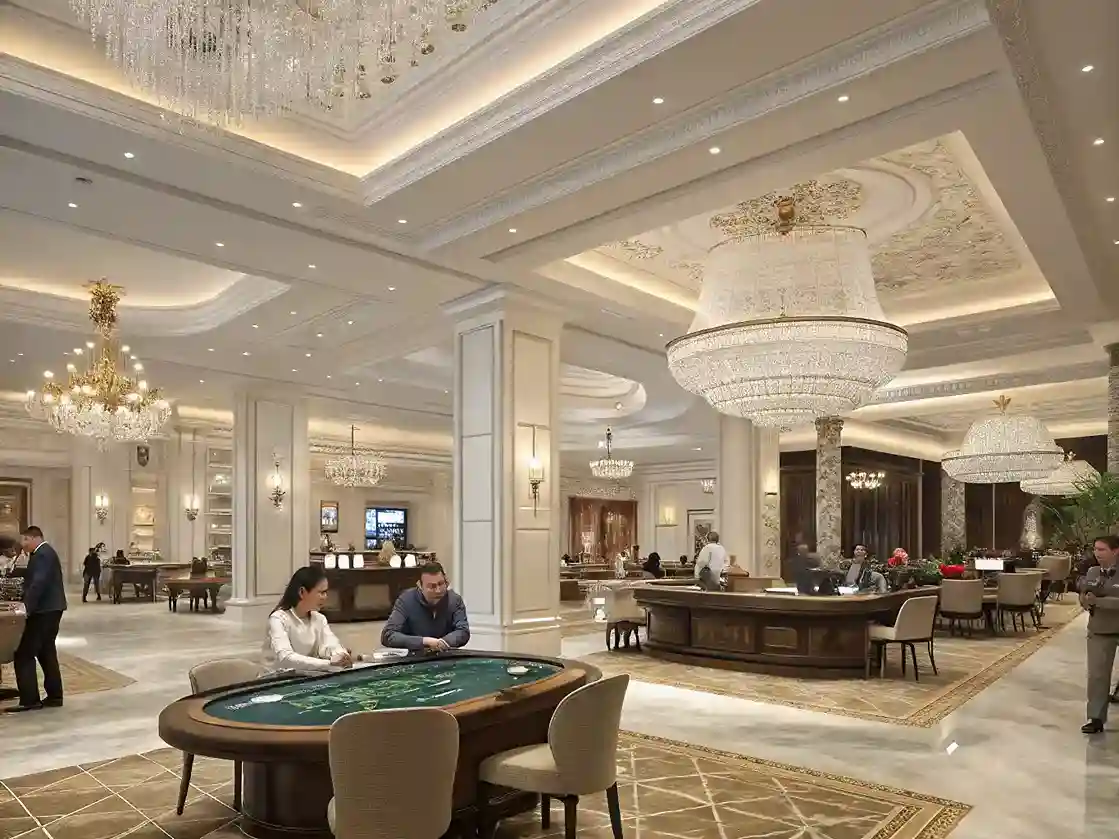
For decades, the classic European luxury casino sold a fairly simple promise. It offered formality, visual grandeur, polished service, and the emotional thrill of entering a room most people could not casually access. That model still has power, particularly in legendary properties such as Casino de Monte-Carlo or Casino Baden-Baden, both of which trade on history as much as on gaming itself. Baden-Baden’s official materials still lean into nearly 200 years of tradition and the idea of a rarefied experience, which remains valuable for heritage-minded guests.
The problem is not that luxury has become irrelevant. The problem is that static luxury has become less persuasive. Younger wealthy visitors usually do not want a night that feels like a museum with roulette tables. They want a scene. They want fluidity between dinner, drinks, music, gaming, terrace life, people-watching, and social media-worthy moments that still feel private enough to signal taste. Skift’s 2025 luxury-travel reporting points in that direction, describing a market where luxury is being redefined around changing expectations and more experiential forms of value.
That creates a pressure point for European casinos with old reputations. Heritage remains an advantage, but only if it is activated. A historic ballroom is impressive once. A historic room that leads naturally into a late dinner, a stylish bar, an exclusive terrace, an event calendar, and a personalized VIP journey becomes something stronger: a living luxury product. This is where many offline casinos in Europe still lag. They preserve grandeur but fail to build momentum around it. Monaco, by contrast, increasingly treats gambling as part of a continuously staged luxury night rather than as the whole show. That is an inference from how its official tourism and SBM platforms present the destination: not as a single venue, but as an orchestrated sequence of premium experiences.
Monaco’s real advantage is not the gaming floor
It is tempting to think Monaco wins because it has the most famous casino façade in Europe. That helps, of course. Casino de Monte-Carlo remains one of the most recognizable gambling venues in the world, and Monaco’s tourism authorities recently highlighted that it received the Best Overall Casino award at the European Casinos Awards 2026. Yet awards and architecture are only surface-level explanations. Monaco’s deeper advantage is that it controls an unusually complete luxury circuit around the act of play.
Monte-Carlo SBM’s own positioning makes that clear. The group markets hotels, restaurants, casinos, nightlife, events, spas, and loyalty benefits as one integrated universe. The My Monte-Carlo program lets guests earn and redeem points across the resort, including hotels, restaurants and casinos, which turns spending into continuity rather than fragmentation. For a younger wealthy customer, that matters. It reduces the friction between different parts of the evening and makes the entire stay feel curated rather than pieced together.
This is also why Monaco is better positioned than many traditional casino towns to respond to changing luxury demand. Official Monaco tourism figures for 2025 showed continued growth in occupancy, average room rate, and revenue per available room. That does not prove that casinos alone are driving the trend, but it does show the destination’s high-end hospitality machine is healthy and able to support premium in-person spending. Luxury gambling performs best when it sits inside a wider ecosystem of prosperous hotels, event traffic, and discretionary consumption. Monaco has that ecosystem already working in its favor.
Another important point is symbolism. Younger affluent travelers often care less about old-school notions of exclusivity for their own sake and more about whether a venue signals access, style, relevance, and story. Monaco can still offer dress codes, ceremonial entry, and belle époque prestige, but it also pairs that with a nightlife network, terrace culture, branded dining, and frequent event programming. That blend is easier to sell to a 34-year-old founder, trader, athlete, or creator than a pure “velvet rope and silence” casino model.
How Monaco is redesigning the night around the player
The clearest sign of Monaco’s adaptation is the way it now supports different tempos of luxury gambling instead of pushing everyone through the same ceremonial experience. Casino de Monte-Carlo still represents the grand, iconic, almost theatrical version of play. Casino Café de Paris, by contrast, is officially framed as more contemporary, modern, welcoming, and accessible in rhythm, with a strong slot offer and long operating hours. Its official pages also emphasize two outdoor terraces and 24/7 access for parts of the venue, which fits much better with today’s looser, social-nightlife behavior.
That matters because younger wealthy customers often do not arrive with the same mindset as older high rollers. They are less likely to treat the casino as a solemn destination in itself. They are more likely to fold it into a broader night out. They may start with dinner, move to cocktails, step into gaming for forty minutes, leave for a club set or terrace conversation, then return later. A casino that can support this rhythm without collapsing its luxury image has a serious edge. Monaco appears to understand this by maintaining both the classic prestige of Monte-Carlo and the more contemporary energy of Café de Paris under one wider resort logic.
The role of terraces is particularly revealing. Monaco’s own materials highlight outdoor gaming and year-round terraces as part of the destination’s casino appeal. That may sound like a small operational detail, but strategically it is significant. Terraces soften the threshold between gaming and social life. They allow gambling to feel less enclosed, less transactional, and more naturally woven into luxury leisure. For younger guests, that can make the casino feel like part of the evening’s atmosphere rather than an isolated room where the mood abruptly changes.
A successful luxury casino for the coming decade will likely need several things at once:
- A strong visual identity that photographs well without feeling tacky.
- More than one mood, from ceremonial high glamour to relaxed premium sociability.
- Seamless movement between gaming, dining, bars, and events.
- Loyalty tools and personalized service that reward broader resort spending, not only gambling volume.
- Enough privacy for serious money, but enough energy to remain attractive to younger status-conscious guests.
Monaco is not perfect, and it will still have to balance exclusivity with approachability, but it is already building more of these ingredients than many of its rivals.
What younger wealthy guests are really buying
The old assumption was that rich casino guests primarily bought gambling access. Today, a younger wealthy audience is often buying something wider: a high-status environment that validates identity and compresses many pleasures into a single evening. Gaming still matters, but it competes with fine dining, nightlife, visual design, convenience, privacy, and the emotional logic of being “in the right place.” McKinsey’s work on luxury travel points to a more nuanced consumer base than the stereotype of the ultra-rich, while Deloitte’s travel outlook highlights the generational turnover shaping demand.
That means the future of luxury gambling is less about adding more tables and more about designing better reasons to linger. A younger affluent customer is often far more responsive to atmosphere than to pure gaming inventory. They may appreciate a beautiful blackjack table, but they are just as likely to remember the lighting, the soundtrack, the flow from lounge to floor, the terrace crowd, the service tone, and whether the venue felt culturally current. Offline gambling now competes not only with online casinos but also with premium restaurants, members’ clubs, hotel bars, beach clubs, concerts, and private events. To win, it has to justify time, not just money.
A useful way to understand Monaco’s position is to compare it with other notable offline casinos in Europe. The table below is not a ranking. It shows how different venues express luxury, and why Monaco’s hybrid model may be especially strong for a younger high-spending audience.
| Casino | What it represents offline | What Monaco can learn or reinforce |
|---|---|---|
| Casino de Monte-Carlo | Iconic heritage, ceremonial glamour, global prestige. | Keep the legend, but package it with more fluid nightlife and personalized resort journeys. |
| Casino Café de Paris, Monaco | Modern, more open, terrace-led, socially flexible gaming. | Use it as the bridge product for younger affluent guests who want luxury without stiffness. |
| Casino Baden-Baden | Tradition, classical luxury, historic atmosphere. | A reminder that heritage still works when it feels alive rather than dusty. |
| Casino Lisboa | Large-scale contemporary casino entertainment with broad gaming access. | Reinforces the value of modern energy, but Monaco can outperform it on prestige and urban theatre. |
| Casino Gran Vía, Madrid | Urban casino-nightlife mix in a stylish city-center setting. | Shows the strength of combining gambling with city-night momentum, something Monaco is actively refining. |
| Ca’ Noghera, Venice | Accessible modern casino format with poker and scale near travel infrastructure. | Useful contrast: convenience matters, but Monaco’s edge lies in making gambling feel socially aspirational, not merely available. |
What this comparison shows is that Monaco does not need to imitate everyone else. It already has stronger symbolic capital than most European rivals. Its task is to make that capital legible to a generation that values movement, experience, and curated freedom more than old rituals for their own sake. The smart move is not to become less luxurious. It is to redefine luxury as something more kinetic and socially intelligent.
Offline casino examples that show where Europe is heading
Outside Monaco, several offline properties show fragments of the future, even if none combine them as completely. Casino Gran Vía in Madrid is a good example of a venue that understands urban energy. Its official positioning leans into gaming, fine dining, entertainment, and an iconic central address. That matters because younger affluent guests often prefer a casino that feels stitched into city life rather than detached from it. They want a night that can continue elsewhere, or begin elsewhere, without losing momentum.
Casino Lisboa points toward another important trend: scale, accessibility, and contemporary gaming comfort. It is less mythic than Monaco, but it shows that a modern luxury-adjacent casino does not need to rely on aristocratic codes to attract traffic. It can succeed through brightness, volume, ease, and entertainment logic. For Monaco, that is useful not as a model to copy wholesale, but as a reminder that modern premium guests are comfortable with less intimidating forms of entry. Not everyone wants to feel like they are auditioning for a period drama before they can place a bet.
Baden-Baden remains relevant for the opposite reason. It proves that historical grandeur still sells when it is protected and properly staged. The mistake would be to assume that young wealthy customers reject history. They do not. They reject dead history. They respond well to places with real aura, provided those places do not feel inert, overly procedural, or disconnected from the pleasures that define luxury nightlife today. Monaco’s opportunity is to keep the aura and remove the stiffness.
Venice’s Ca’ Noghera illustrates one more lesson. Practicality still matters. It benefits from proximity to the airport and offers a more contemporary, scalable format. That is not the same proposition as Monte-Carlo, but it reflects an important truth: the next generation of casino customers values convenience more than old operators once assumed. Monaco will never compete on convenience in the mass-market sense, yet it can compete on frictionless premium movement inside the destination, which is why integrated booking, loyalty, transport, hospitality coordination, and service personalization matter so much.
The next decade of luxury gambling in Europe
The future of luxury casinos in Europe will probably not belong to the venues that simply preserve grandeur best. It will belong to the venues that convert grandeur into relevance. That means understanding that offline gambling now lives inside a broader contest for premium leisure time. A younger high-net-worth guest can spend the same evening budget on a Michelin-starred dinner, a members’ club, a yacht event, a Formula 1 package, a beach club, or a private performance. The casino wins only if it delivers atmosphere, narrative, and flexibility that feel stronger than those alternatives. Monaco is unusually well placed because it already concentrates many of those adjacent pleasures in one destination.
That is why Monaco’s rebuild is so important for the wider European market. It suggests that the future offline casino is not a room full of games with luxury decoration. It is a luxury platform where gambling is one expression of status, pleasure, and social theatre. The gaming floor still matters, but it is no longer the whole proposition. The winning model is experiential, mobile across moods, rich in hospitality links, digitally assisted where useful, and careful not to lose the emotional charge of exclusivity.
Monaco’s challenge now is execution. If it can keep refining the relationship between legend and liveliness, between formal elegance and social ease, it may set the template for Europe’s next luxury casino era. If it leans too heavily on heritage, it risks becoming admirable rather than magnetic. If it modernizes too aggressively, it risks diluting the mystique that makes Monte-Carlo special in the first place. The most likely path is the middle one: preserve the icon, diversify the experience, and sell the night rather than the table. On that measure, Monaco already looks less like a relic of old-world gambling and more like a laboratory for what offline luxury gaming may become.